Nantucket Sound in late April can be a little rough. The
slow boat to Nantucket Island was skimming across a sea of white caps, bumping
along in the early afternoon surf, spraying the bow in a light mist and
producing several loud claps when a wave caught it at just the right moment. We
had parked the car in Hyannis and walked aboard several hours earlier and were
nearing our destination. We had been invited by our friend Janet to visit her
for the weekend and to participate in the Annual Daffodil Parade, an event
celebrating the arrival of Nantucket’s beautiful yellow flower each spring.
As I mentioned, the late afternoon crossing was
appropriately nautical and the slow boat was, well, slow. Luckily the Steamship
Authority had the good graces to allow the sale of beer aboard and I joyfully
sipped a Pale Ale from John Harvard’s Brewery. Medium-bodied with just the
right balance of sweet malt, earthiness and citrusy hops. John Harvard’s has a
number of brewpub locations in the northeast including Harvard Square in
Cambridge, but I was happy to find it on board, albeit in a biodegradable,
compostable cup.
Janet greeted Amanda and me at the pier and whisked us
across the island to drop our luggage at her apartment. The next morning Janet
brought us to the Nantucket Wildflower Farm to secure our transportation for
the day. The outside of the 1953 Chevrolet pickup truck was near immaculate,
the inside and what could be found under the hood was not so much. After
“punching” it a few time, Janet managed to get the truck sputtering to life as
Amanda in her poodle skirt and me in my best Buddy Holly costume watched on.
Thankfully, the truck made it downtown where we filled the
bed with the parade’s namesake flower and loaded half a dozen children into the
back, attired in varying shades of 1950s dress.
I stepped inside the downtown beer and wine store to pick up a few
bottles of beer for the picnic at the finish of the parade. Cisco Brewing
Company is Nantucket’s only brewery and it only seemed appropriate to grab a
few 22 ounce bottles of their Whale’s Tale Pale Ale for the festivities. I tucked them into our cooler and surveyed
the growing number of vintage cars spread across the cobbled main street. When I returned to the truck it looked a
little worse for wear under the weight of daffodils, peanut butter sandwiches
and school children. There was some fear that the truck’s chassis couldn’t
stand the pressure—that would prove to be the least of our worries, however.
Some announcement or other signaled that we’d be moving out
soon and that all cars should prepare for the start of the parade. As lovely as
our transport appeared, it did not wish to start, it was perfectly content at
being ogled by the crowd and apparently it didn’t hear about the peanut butter
sandwiches and beer we had planned at the finish. As each of the other cars
revved and readied, our 1953 Chevy was on life-support, hooked up to a
generator. The children stared as the other cars shuttled off, leaving a lonely
green truck packed with daffodils.
It was eventually determined that the kill-switch hadn’t
been engaged or that the flange hadn’t been aligned with the down-thruster or
some such technical terminology, but the truck started and we were hurtling
down the road. I was, in fact, holding on to the doorframe at the open window
as it had been determined that I would be riding the running board. This was a good plan if we had been slowly
making our way with the other cars to the end of the island, but since we were
trying to catch up to the pack from our slow start I held on for my life at
what was most certainly a speed exceeding all reason.
We did manage to catch up with the other cars without me
falling off into a sand dune and the rest of the afternoon was spent picnicking
and talking with the other drivers. I popped open the Cisco Whale’s Tale, which
went perfectly with the peanut butter sandwiches. Later that evening I order
another at a local restaurant on draught, it poured a slightly hazy orange with
a moderate off white head of foam, hints of caramel malt throughout with a
slightly musty, herbal hoppiness through the finish. It had been a long day, but a lot of fun.
The light drizzle and overcast skies had disappeared by the
next morning, replaced by a gentle sea breeze and brilliant sunshine. The
temperature was just perfect and we made the drive out to the Cisco Brewery for
a few beers. When we visited, the bar at
Cisco opened onto a patio with a number of tables and chairs positioned to
accommodate a few dozen patrons. During this visit a brown dog strolled around
walking in and out of the bar area to check on his guests. With the
temperatures hovering in the lower 60s, I figured it would be a fine time to
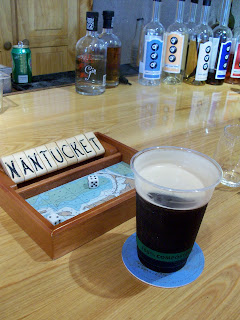
drink Cisco’s Moor Porter. From nitro into a biodegradable cup, the beer poured
a deep, creamy brown with a soft mocha head.
Plenty of cocoa and coffee in the aroma with hints of caramel, grain and
toffee, with a heavily roasted malt bitterness through the finish.
It might have been one of my favorite days of drinking beer.
The temperature and atmosphere was simply perfect. We passed the time playing
shut-the-box and chatting as the dog made his rounds and the bar guests sipped.
While I knew the weekend was coming to a close, I took no notice of it,
allowing the moment to take away the care that in the morning we had to leave.
We bid farewell to the barkeep and the dog and the next day to Nantucket. The crossing back to Hyannis was a bit kinder
this time and it was smooth sailing all the way back to the harbor. It had been
a remarkable weekend and one that I will always remember fondly. Good beer,
good fun, good times.

 Beer and
summer are meant for each other. Over
the next several weeks, I’ll take a look at a few summer beers that I think
epitomize the relationship.
Beer and
summer are meant for each other. Over
the next several weeks, I’ll take a look at a few summer beers that I think
epitomize the relationship.


